Today was basically Oskar Schindler day for us in Krakow: Schindler's factory in the morning; the ghetto at lunch; and Płaszow Concentration Camp in the afternoon. If the meat of the day was Schindler, the sauce was provided by one student who seems to have had one too many adventures last night.
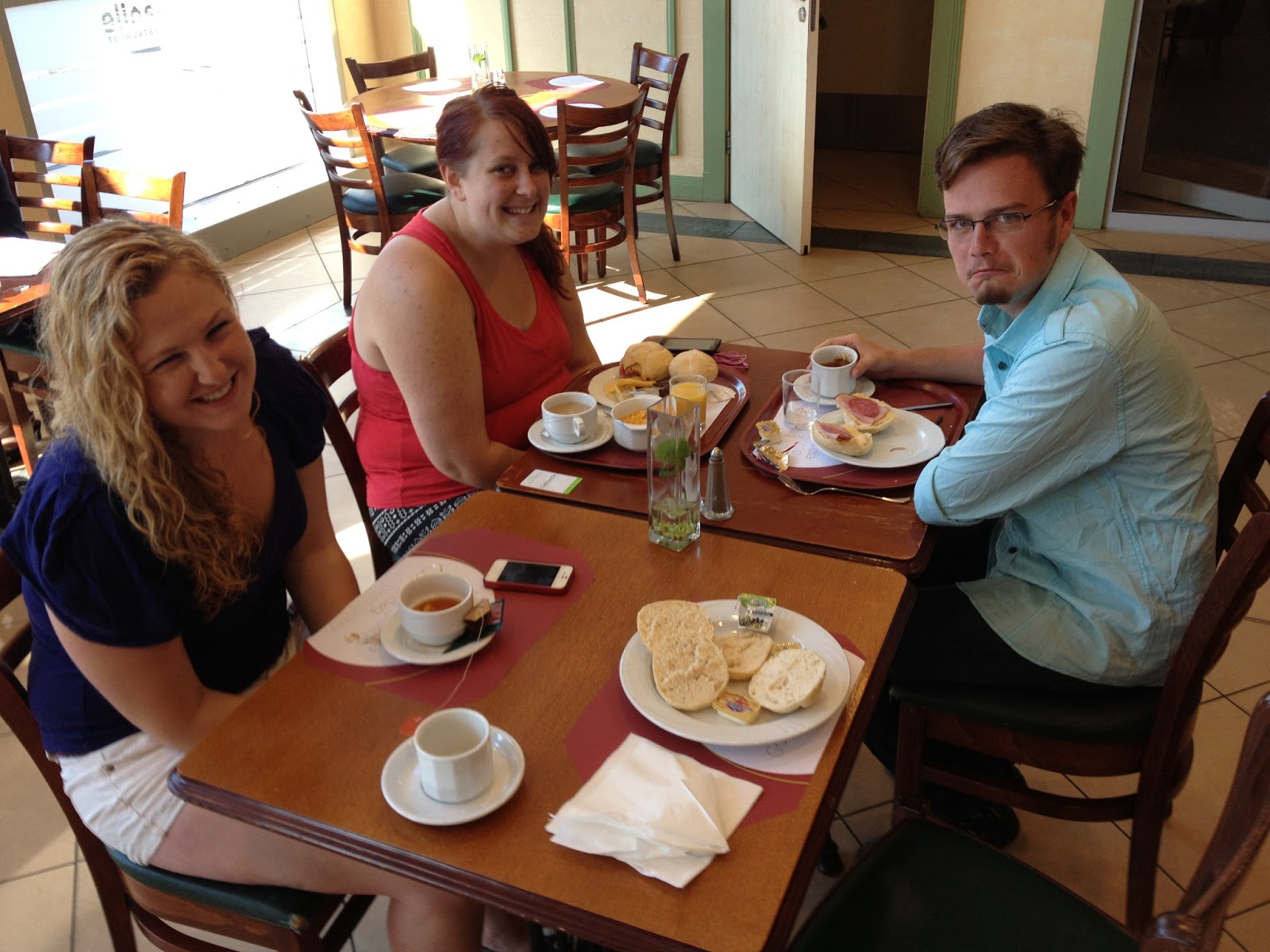
I knew he had wanted to go out to find a hipster bar and was relieved when his roommate told me over breakfast that he had returned to the hotel. What I didn't realize was his condition. He actually didn't remember coming back last night. The problem seems to be that he decided to try absinth, and having (he was told) drunk it wrong the first time, he had to have the second one correctly (it was only polite, he explained).
When we got to the tram stop he realized he had forgotten something and he took off running. He came back five minutes later when he discovered his roommate had his room key. He came back just in time to get the tram, which is when I found out that his 3-day bus pass apparently disappeared with his memory.
According to the desk clerk, he came home last night under his own steam, but that it took him a few attempts to get up the stairs to his room.
He was downing lots of water on the train and then picked up a big ice tea when we got to the factory. I wanted to arrive early since buses often pull up, and the student ended up on the ground looking absolutely miserable.
I've decided to cut him off. Since his bank card was eaten by the ATM a few days ago, I'm the source of his funds, and I told him this evening that he must have a drinking buddy when he goes out.
Luckily, the worst of it passed in the morning and we had some very good conversations about bystanders and responsibility during the Holocaust as we went through.
The Schindler factory is now a large interactive museum, with areas made to look like Krakow at various stages of before, during, and after the war, along with visual images and sound effects. Most of the students liked it, so some felt overwhelmed by the shear volume of the texts. Up on the top floor in Schindler's office.
One of the students asked about a painting in his office (not the map, but the one in the upper right corner of the photo). It showed a naked woman lying in a bed and some students wanted to know if that was original. I asked the room attendant but as today was only her second day on the job she didn't know. I saw a Polish guide leading a group of German gymnasium students and so I approached her.
I forgot the word for painting so had to adapt:
Me: Is this piece of art original?
Guide: [in any angry, surly tone and glaring at me]: "Yes!"
Me: Was it here when Schindler worked here?
Guide: [almost offended to be speaking to me]: "Yes!"
Afterwards I wondered if she felt I was trying to steal something from her by answering my questions when I hadn't paid her to be my guide.
The museum ends with a room with an art installation called "choices" and two books listing the kinds of choices people had:
When we left the factory, we stopped at a local grocery for more water (and ice cream for some) and I noticed the wall graffiti. Some of it, like this, appeared to be anti-Semitic:
We had also seen elsewhere a Jewish star with a line through it like this, but with an A on one side and a J on the other. When we visited the pharmacy exhibit we found out what they mean.
Thankfully, there was also some fun wall art that wasn't anti-Jewish:
Before we went to lunch, I wanted to finish up with two fragments of the Krakow ghetto wall. The wall had been constructed to look like tombstones. In 2007, when I visited this first fragment, someone in the apartment courtyard behind it through something over the wall at me. I asked the students to keep their voices down.
The second fragment is adjacent to a playground. One student asked what the children who were playing there now will think when they grow up and remember where they played.
For lunch, we visited a small diner-type restaurant we ate at two years ago. It's just off the main square in the Podgorze neighborhood. You place your order and pay and then they bring it to your table.
After my main course, I decided to order the strawberry pierogies for dessert and share them with any student who wanted. The strawberries were fresh, with one large strawberry per pierogi. I loved them.
When we finished we walked across the street to the Pharmacy Under the Eagle. This pharmacy stood in the ghetto and the Polish pharmacist and his three assistants refused to leave when the ghetto was created. From their position on the ghetto square, they not only witnessed what was happening in the ghetto, but also were able to provide help to the Jews in secret.
Most of the pharmacy is restored to look like a pharmacy from the war years, but there are also lots of interactive displays.
One installation in the back also discussed anti-Semitic graffiti in Poland. Here's the explanation for what we saw on the building:
Our last stop for the day was the ruins of the Płaszow camp (made famous by the movie Schindler's List). Virtually the entire camp was destroyed before Soviet forces liberated Krakow in January 1945. The only buildings left were the Grey House
used by the SS to hold and torture prisoners. And the Red House,
where camp commandant Amon Goeth and his subordinates lived. It was for sale two years ago and appears to be still for sale today.
From there we braved the heat to walk to the cluster of memorials at the top of the hill, including this brand new one that I still need to translate. I can tell it concerns members of the Home Army resistance, but beyond that, I don't know.
Before we went back to the hotel, I stopped off to pay off the remainder of the balance on our bus rental for Friday. The original plan was to visit Auschwitz tomorrow and then have Friday as a free day, but in order to make the arrangements work, I had to reverse it. As a result, we are having a pre-emptive mental health day tomorrow and then going to Auschwitz-Birkenau on Friday.
I made reservations for our farewell dinner on Saturday night at Szara Kazimierz.
Because of mosquitoes in the evening, they recommended we skip the back garden for the inside, and I agreed.
Then I went to the bus station to pick up info on the buses to Zakopane in the morning and figure out what time we needed to leave.
When I got back the students were waiting to go to dinner. I was going to suggest something light nearby, but they wanted heavy and in the Rynek. We went to Wesele, a Michelin Guide recommended restaurant (we ate here two years ago too).
With the hot sun still pounding down at 6:30, we went inside.
The goose here is excellent so I ordered goose breast with pear and cranberry sauce over small tart apples. The late afternoon sun cast weird shades, but here it is:
I saw the vanilla ice cream sundaes with strawberry syrup from a distance and decided to get one. I'm glad I did.
Afterwards we walked around the Rynek Głowny and enjoyed the early evening coolness.
Wednesday, July 03, 2013
Tuesday, July 02, 2013
Safe in Krakow
Since we couldn't go to the Museum of the Warsaw Rising today, we were able to have one last leisurely breakfast in the hotel.
I thought we might leave on a slightly earlier train. Since my tickets didn't have a specific time or seat reservation, I thought we could leave on the 10:50 train, rather than the 11:45.
They've renovated Warszawa Centralna since 2011, but it's still a bit of a maze and does have the occasional dodgy part, but this place wasn't bad.
The train ride was pretty awful. As usual, the train carriages come up half a platform away from where we are waiting. I checked the chart and kept moving down further and further, but still we weren't quite far enough. I was hoping for compartments, but I got on the carriage with rows of seats. As soon as I opened the door, a wave of warm, moist air wafted out, but there were so many people already stacked up behind me there was no way but forward.
It was a mad house. I found some seats and took them. People were pushing. The train finally started moving and we were able to crack a few windows open. As people with seat reservations came in other had to move, but thankfully I didn't have to. Eventually, the temperature dropped enough to be almost bearable.
Then the ticket collectors came on board and told us that the tickets I had purchased weren't good on this line. I purchased new ones on board. They told me to go to the main ticket office in Krakow to get refunded. I did. They refunded 85% of the original purchase price.
Eventually we did get to Krakow and checked into our hotel. From there, I took them to the Stare Miasto to get some food and rest.
I went with the pierogies (always a safe bet):
Of course, I had to get dessert; something cold after the long warmth of the train ride.
After that we walked down ul. Florianska towards the main rynek
Some of the students wanted to try flavored Polish vodkas like the krupnik, made with honey.
After that, we wandered through the Cloth Hall
And made our way across the old town towards an English-language bookstore in the university area.
Tomorrow we have a full day with the Schindler Factory in the morning, the former Krakow ghetto, and then the Płaszow slave labor camp in the afternoon.
I thought we might leave on a slightly earlier train. Since my tickets didn't have a specific time or seat reservation, I thought we could leave on the 10:50 train, rather than the 11:45.
They've renovated Warszawa Centralna since 2011, but it's still a bit of a maze and does have the occasional dodgy part, but this place wasn't bad.
The train ride was pretty awful. As usual, the train carriages come up half a platform away from where we are waiting. I checked the chart and kept moving down further and further, but still we weren't quite far enough. I was hoping for compartments, but I got on the carriage with rows of seats. As soon as I opened the door, a wave of warm, moist air wafted out, but there were so many people already stacked up behind me there was no way but forward.
It was a mad house. I found some seats and took them. People were pushing. The train finally started moving and we were able to crack a few windows open. As people with seat reservations came in other had to move, but thankfully I didn't have to. Eventually, the temperature dropped enough to be almost bearable.
Then the ticket collectors came on board and told us that the tickets I had purchased weren't good on this line. I purchased new ones on board. They told me to go to the main ticket office in Krakow to get refunded. I did. They refunded 85% of the original purchase price.
Eventually we did get to Krakow and checked into our hotel. From there, I took them to the Stare Miasto to get some food and rest.
I went with the pierogies (always a safe bet):
Of course, I had to get dessert; something cold after the long warmth of the train ride.
After that we walked down ul. Florianska towards the main rynek
Some of the students wanted to try flavored Polish vodkas like the krupnik, made with honey.
After that, we wandered through the Cloth Hall
And made our way across the old town towards an English-language bookstore in the university area.
Tomorrow we have a full day with the Schindler Factory in the morning, the former Krakow ghetto, and then the Płaszow slave labor camp in the afternoon.
I Hate Łódż (updated with pictures)
When I first visited Łódż in 2006, I published a blog entry called “Surviving Łódż“ about my difficult
experiences in the city. I arrived at a
train station with no maps and no one to help me. The city, which originally must have been
quite beautiful before WWI, now was run down and decayed. I described it as a coma victim. Now seven years hence, I see no reason to
revise my judgment except that now I actively dislike the city.
These were dug by the 800 so Jews who remained in the ghetto after its liquidation in July and August 1944 (it was the last Polish ghetto to be killed). The Nazis had them remain in order to go through all the houses of the people who had been sent to Auschwitz and in the fall forced them to dig these pits, which were intended as mass graves once they had finished their work. Thankfully, though, the Nazis panicked as the Soviets approached and ran, and just under 900 Jews were liberated on 19 January 1945. They asked that the pits remain as a memorial since they were meant to be their graves.
This is the third time I’ve been in Łódż, and the second time I’ve brought
students here. Last time, we got off at
the main train station and ended up walking forever to get to the pedestrian
mall and then the Jewish ghetto. That
train station is closed for renovation, so I made plans to exit at Łódż Widzew station. I found directions online on how to get from
there to the Jewish cemetery by public transportation, cutting back on the
amount of walking we’d have to do.
Nothing went well.
First, our train was delayed 40 minutes as we sat motionless
on the tracks. In fact, as I right this
now on the train to Krakow we are again sitting motionless. I saw online a warning notice about delays on
Polish trains, but I’m not sure what the problem is. Instead of arriving at 10:30, we didn’t get
in until well after 11. I found the tram
to the city center, but then thought I got on in the wrong direction, changed
to what I thought was the right direction, but then found out I had been right
the first time. Eventually we reached the city center where we needed to change
to a the #1 tram.
By that time, though, our one-hour tram tickets had expired
so I bought new ones. And we
waited. And we waited. No #1 tram.
I saw a traffic person, so I went up to him and asked “Line 1?” He said “no.”
After much confusion, I found out that Line 1 had been discontinued
(even though it was still listed as stopping where we were). A very helpful Polish woman (and I met
several very helpful people in Łódż
who helped me at various crisis points during the day) told me that I needed
the #57 bus, which I could get from the other side of the mall, two blocks
away. I gathered the students and we
started walking.
We missed the #57 by two minutes, so we now had a
fifteen-minute wait. One student wanted
to know if she could go into the mall and use the restroom, but I told her if
she missed the bus she was on her own.
She decided to wait. The bus
arrived late, but eventually it did arrive.
I overhead a conversation on the bus of two people speaking
English talking about changes to the public transportation system. Several people on the bus were very upset
that it wasn’t going to stop where it was supposed to. From what I could see, a major street was
undergoing renovation and was closed and several buses and trams were either
rerouted or cancelled. Meanwhile, I had
to try to figure out what our stop was to find the cemetery. After 35 minutes I thought I recognized a
corner where we had bought snacks two years ago and asked someone “Jewish
cemetery?” He said “next stop.” So we
got out.
I saw a bakery and announced this was a food break. I got some fruit-filled sweet rolls (the
blueberry was very good),
and the student found a restroom in a rehab center across the street. After we walked one block I found the walls of the Jewish cemetery.
As a result of all our delays, it was after 1 pm when we
finally reached our first location of the day’s tour. The students played with the cemetery cat and
used the restroom while I bought tickets.
We began with the mortuary, built in the late 19th
century, with its main hall for funerals and a hearse.
Łódż was basically a small town up until the industrial revolution in the later half of the nineteenth century; the main part of the grave yard is from the late nineteenth and early twentieth centuries. However, since the cemetery was in the ghetto, some 48,000 Jews who died from starvation and disease in the ghetto are also buried here. It’s the largest Jewish cemetery in Europe (I think in acreage, not in numbers of the dead).
Along the wall of the cemetery are numerous plaques set up
by Jews and Jewish communities for individuals who died in the ghetto. There are also a set of deep pits.
These were dug by the 800 so Jews who remained in the ghetto after its liquidation in July and August 1944 (it was the last Polish ghetto to be killed). The Nazis had them remain in order to go through all the houses of the people who had been sent to Auschwitz and in the fall forced them to dig these pits, which were intended as mass graves once they had finished their work. Thankfully, though, the Nazis panicked as the Soviets approached and ran, and just under 900 Jews were liberated on 19 January 1945. They asked that the pits remain as a memorial since they were meant to be their graves.
The students had lots of questions about the designs on the
tombstones. I explained that the hands
making the Vulcan gesture meant a descendant of priests. Candlesticks were for women. Books meant a scholar or rabbi.
[The train has finally begun moving again. YAY! I
think that was a 30-minute delay]
My goal was the ghetto field. During the war, daily burials ranged from
just a few dozen to almost two hundred.
They did not bury them in mass graves, but rather individual plots. They have been trying for nearly 10 years to
place markers on each grave, but they have a long way to go.
Some of the earliest markers also seem to be deteriorating.
While we could easily spend two hours in the cemetery, I
wanted to move on (and not just because of the mosquitoes). I made sure we walked out past the Poznanski
tomb. He was the wealthiest
industrialist in pre-WW I Łódż,
and he owned the largest textile factory in the city. His home, the Poznanski Palace, is now a
museum and his former factory is a large shopping center. His tomb is prominent and impressive.
After leaving, we made our way to Radagast Station. The two times I had been here previously, the
museum exhibit was closed, but thankfully, it was open now. The exhibit is in what looks like a long
concrete train tunnel with tracks on the roof having motion-censor lights that
come on as you near them.
On the walls they display pages of lists of deportations that came into and left the station.
Jews were deported to what the Germans called the
Littsmanstadt Ghetto from surrounding towns, as well as Germany, Austria,
Luxemburg, and the Netherlands. Over
5000 Roma and Sinti were also deported to the ghetto; in the space of two
months some 700 died from the horrendous conditions (and buried in part of the
Jewish cemetery), with the rest deported to Chelmno in January 1942 where they
were all gassed. Jews sent out of the
ghetto were mostly sent to Chelmno to be gassed on arrival or to
Auschwitz-Birkenau, where a small fraction survived as slave laborers.
There’s also a very small exhibit in the Radagast Station
building, which includes a map of the ghetto.
I photographed so I could find my way back to the main area.
Unfortunately, it appears that this is the historical map,
and some of the streets have since been renamed and rerouted. Following what appeared to be a direct path,
we ended up in the parking lot of a beer distribution plant with no exit. Not willing to hop the six-foot fence into
someone’s backyard, we had detour around it.
After about 30 minutes of walking we finally reached the
center of what had been the ghetto. I
was looking for the ruins of Hospital #1, but turned one block too soon. I told the students how on 2 September 1942,
the hospital was surrounded and all the patients loaded on trucks bound for
Chelmno.
This piece of wall art reproduces a photo of a child slave laborer in the ghetto.
We also saw a pharmacy building that had stood in the ghetto
and was still a pharmacy today, as well as the main ghetto administration
building.
I found a small green area to the side and we read as a
group ghetto elder Chaim Rumkowski’s horrific speech to the ghetto on 4
September 1942, when he explained that he had been ordered to deport all
children below the age of 10, the sick, and the elderly from the ghetto; some
20,000 people. The ghetto chroniclers
recorded that Rumkowski’s speech was repeatedly interrupted by the screams of
distraught parents. Everyone knew that
in this case, deportation meant death.
The ghetto was placed under curfew and the police went building by
building. When one building fought, the
Germans came in and even more people were taken. It was the worst moment in the ghetto’s
history up until its liquidation.
What had happened was that Himmler wanted to liquidate the
entire ghetto, as he had done in Warsaw, but the German army objected because
the ghetto was making all its uniforms.
So the compromise was that all Jews who were either too young, too old,
or too sick to work would be taken, and the surviving portion of the ghetto
would basically become a forced labor camp.
As a result of this compromise, the ghetto survived an additional two
years.
By now it was nearly 5 pm, and the students (and I) were
pretty tired. It was time to get an
early dinner before taking the train back to Warsaw. I knew that the students really didn’t want
to do any more walking, but the restaurant was off a pedestrian mall and the
trams didn’t run down that street.
In fact, neither did the pavement. In preparation for the high tourist season of
summer, the city fathers of Łódż
decided to rip up the entire pedestrian mall, the main tourist attraction of
the city. We walked six blocks over
earth and stones with various wires and pipes sticking out.
Finally, we reached Anatewka (like the city in Fiddler on the Roof), a “Jewish-style”
restaurant. I’ve eaten there before and
I like the food. As this place is a
little pricier than what the students are used to, and since I have a small surplus
at the moment, I told the students I was treating them to this meal (though
they were on their own for alcohol).
The restaurant is decorated in Jewish-themed kitsch: small rabbi dolls, pictures of Hasidic
rabbis, and Jewish melodies over the speakers.
In the evening, they have a fiddler who sits on a perch over a small,
makeshift roof.
I didn’t like the goose I had last time, so I ordered the
duck breast. It came with a sauce of red
currants and baked apples and chips. The
student to my left ordered the duck in cherry sauce, while other students got
the cheese and onion kreplach.
Everyone seemed to enjoy the
meal, and afterwards they gave us all little tiny toy rabbis, each one
holding a single grosz coin. What could
be offensive about that?
We left the restaurant and I managed to buy tram passes and
find our way to Łódż Kaliska
train stop. This was the very same
station I used when I first arrived here in 2006. The walls of the parking lot are decorated
with bizarre, and slightly threatening wall art.
I recognized the same large number of taxis and the same
absence of city maps. I went into the
main hall to buy our tickets. I got into
what I thought was the shortest line, just two people, but it turned out that
the one at the window was negotiating student tickets for about a dozen Polish
high school students, each one of whom had to fill out a separate form and pay
independently. Thirty minutes later, I
had my chance at the window. I booked us
on the 20:08 train to Warszawa Centralna station.
Around 19:45 we went up on the platform. A train came in from Warsaw but they wouldn’t
let us board. It got closer and closer
to the time of our train, but no listing came up on the platform. Apparently our train was delayed. How long?
150 minutes.
We returned to the main hall where a very helpful Polish
computer graphic design student helped me negotiate new tickets with the clerk.
I had gone to the information window, but the clerk spoke no foreign
languages. Eventually, I got us tickets
on the 21:05 train.
When I met back up with the students, they told me they
wanted to wait up on the platform despite the mosquitoes. It seems a Polish man named Christopher had
come up to them and started talking. He
described himself as “black, black, black,” by which, he apparently meant, he loved
black rap. He asked where they were from
and they said Long Beach. He immediately
replied “Snoop Dog!!” He then kept
asking them for money.
Up on the platform, as I swatted away flies, he came up to
ask for a light. I said no. He said “shit” and walked away. I said “no shit,” and continued to shoe away
the mosquitoes. Finally, the train
arrived and we got on. Thankfully there
were no delays and we reached Warsaw by 11:15 pm.
Since we hadn’t been able to visit the Museum of the Warsaw
Rising last Friday, my plan was to get up early on Tuesday and see it before
our train to Krakow. Unfortunately, the
museum is closed on Tuesdays. I told the
students they could sleep late and that we would leave for the train station
around 10 am and take the 10:50 train.
I’m on it now, and after two half hour stops for no apparent
reason, we are finally nearing Krakow.
Oh, and it turns out that the tickets I purchased were for an IR train,
not the IC train we’re on, so I had to buy new tickets on board. From what I could tell from the conductor, we
may be able to get a refund on our IR tickets at Krakow train station. I hope so.
Free Day (updated)
I built in "mental health days" to the trip to give the students some time to unwind and refresh after particularly difficult days. Our "mental health day" began as soon as we got back from Lublin and Majdanek.
I knew that some of the students wanted to go out but were nervous about exploring on their own, so I agreed to go with them. The guide book mentioned a collection of cheap bars in the courtyard behind Nowy Świat street, so I took four students and went there around 11 pm. I told them that 1) I don't drink a lot; and 2) I would be returning to the hotel no later than 1 am.
The area is called "The Secret Garden" and it was very easy to find. We walked through a wide arched pathway from the main street and found it very full of Poles in various stages of inebriation. The drinks were not particularly cheap but (for those ordering mix drinks) they didn't stint on the alcohol. We went to two different places and before you know it, it was 1 am. I told them I was ready to go back. "But you haven't finished your beer!" they cried. That's ok, I told them, I had enough. One student decided to stay on his own and I took the other three back.
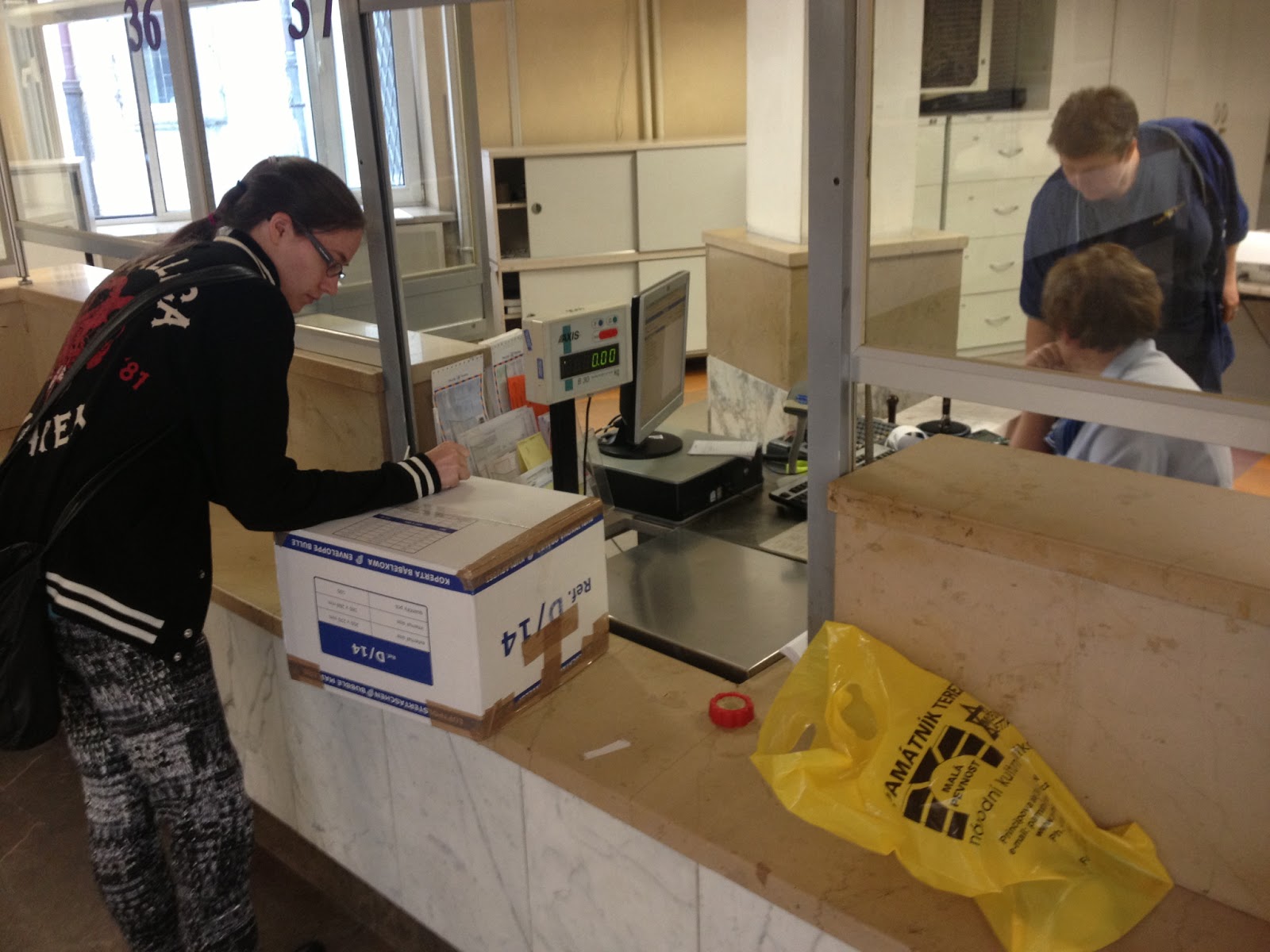
I had originally planned to go to Kazimierz Dolny for my day off, but the thought of spending 2.5 hours on a bus each way, and with possible showers in the afternoon dampened my desire. Instead, I took one student to the central post office (open on Sunday!) so she could mail home clothes and I could mail home books.
We met up with the rest of the students back at the hotel (some had gone shopping). We split up into two groups: one went to Praga to visit the Warsaw zoo (prominently featured in The Zookeeper's Wife), while I took the other four students to go looking for amber. At first, this didn't go well. The street, Świętokryzska. was being torn up for the new metro and we couldn't find anything. Finally, we just went for peirogies on Nowy Świat while I consulted the map.
I soon realized that I was on the wrong street; I had gone to Świętokryzska when I should have gone to Świętojanska (which was very easy to find near the Rynek in the Stare Miasto). It's more confusing when the letters on the map are so small.
The amber stores were filled with a variety of beautiful pieces and most everyone bought something.
We then wandered from store to store, looking at tchotchkes and other stuff. One store had a rather disturbing collection of folk-art style pictures of rabbis counting money.
We headed by to Nowy Świat, and strolled down the street. There's always some interesting street art in Warsaw.
We also saw two South Africans eating zapiekanki, the horrible "pizza" Poles eat. That's barbeque sauce squirted on top in lieux of tomato sauce.
Blickle Cafe, a wonderful sweet shop from the nineteenth century (though reconstructed with the rest of Warsaw after 1945. I went for the custard-cream cake, which was yummy.
[I need to check out of the hotel to head to Krakow; I'll update this later, add photos and hopefully add material on yesterday's trip as well]
I knew that some of the students wanted to go out but were nervous about exploring on their own, so I agreed to go with them. The guide book mentioned a collection of cheap bars in the courtyard behind Nowy Świat street, so I took four students and went there around 11 pm. I told them that 1) I don't drink a lot; and 2) I would be returning to the hotel no later than 1 am.
The area is called "The Secret Garden" and it was very easy to find. We walked through a wide arched pathway from the main street and found it very full of Poles in various stages of inebriation. The drinks were not particularly cheap but (for those ordering mix drinks) they didn't stint on the alcohol. We went to two different places and before you know it, it was 1 am. I told them I was ready to go back. "But you haven't finished your beer!" they cried. That's ok, I told them, I had enough. One student decided to stay on his own and I took the other three back.
I had originally planned to go to Kazimierz Dolny for my day off, but the thought of spending 2.5 hours on a bus each way, and with possible showers in the afternoon dampened my desire. Instead, I took one student to the central post office (open on Sunday!) so she could mail home clothes and I could mail home books.
We met up with the rest of the students back at the hotel (some had gone shopping). We split up into two groups: one went to Praga to visit the Warsaw zoo (prominently featured in The Zookeeper's Wife), while I took the other four students to go looking for amber. At first, this didn't go well. The street, Świętokryzska. was being torn up for the new metro and we couldn't find anything. Finally, we just went for peirogies on Nowy Świat while I consulted the map.
I soon realized that I was on the wrong street; I had gone to Świętokryzska when I should have gone to Świętojanska (which was very easy to find near the Rynek in the Stare Miasto). It's more confusing when the letters on the map are so small.
The amber stores were filled with a variety of beautiful pieces and most everyone bought something.
We then wandered from store to store, looking at tchotchkes and other stuff. One store had a rather disturbing collection of folk-art style pictures of rabbis counting money.
We headed by to Nowy Świat, and strolled down the street. There's always some interesting street art in Warsaw.
We also saw two South Africans eating zapiekanki, the horrible "pizza" Poles eat. That's barbeque sauce squirted on top in lieux of tomato sauce.
Blickle Cafe, a wonderful sweet shop from the nineteenth century (though reconstructed with the rest of Warsaw after 1945. I went for the custard-cream cake, which was yummy.
[I need to check out of the hotel to head to Krakow; I'll update this later, add photos and hopefully add material on yesterday's trip as well]
I suggested to the students that if they wanted, we could go
out to dinner at 7 pm. Back at the hotel
I caught up on detailing my expenses and I emailed the first group to let them
know if they wanted to join us.
Most of the students wanted something either light or green,
so we headed off to a salad bar.
Unfortunately, its times had changed since my guide book was published
and they closed at 6pm on Sundays. We
ended up going to a place a few doors down.
I got the crepes with cheese and onions, which were quite
good.
One student loved her chocolate ice cream sundae with
cherries and cherry syrup, so I ordered one too.
On the way back, we stopped off at The Secret Garden, but it loses some of its cache in the light of day.
After that we headed back to the hotel to get a good night’s
rest before we went back to class (and Łódż) the next day. We passed a mural on Jerozolimskie that looks like it's from the communist period.
I left the students to go buy our tickets to Łódż and Kraków. This is the hell that always awaits me at Warszawa Centralna.
Subscribe to:
Posts (Atom)